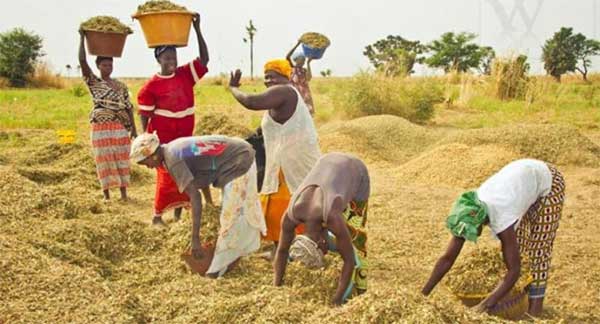
Confronted with climate disruption, pressure on land and rising input costs, Senegalese family farms are seeing their survival threatened. Meeting since yesterday in a two-day forum, the NGO Action solidaire internationale (Asi) is calling for urgent consultation and concrete measures to build a fair and resilient food transition.
By Amadou MBODJI – In Senegal, putting a daily meal on the table is becoming an ordeal for a growing number of farming families. Between recurrent flooding, continuing soil degradation, land speculation and soaring input prices, family farms – the indispensable foundation of the national food system – are buckling under the weight of the crises. “Food systems are bearing the full brunt of climate change. These disruptions are calling into question all our achievements in food security,” lamented Malick Ndom, vice-chairman of the Board of Directors of Action solidaire internationale (Asi), yesterday at the opening of a two-day forum devoted to the just transition of food systems.
Warning of the overall impact on the entire chain – from plot to market – he pointed out the injustice of the situation: “We pollute less, but we suffer the most.” On top of the climate hazard comes suffocating pressure on land. The growing difficulty of accessing land and the phenomenon of land grabbing are reducing the production capacity of rural households. This precariousness increases their dependence on volatile markets and heightens the risk of shortages.
Achieving a just and concerted transition
Faced with this emergency, Asi advocates a strong alliance between family farms, farmers, livestock breeders and fishermen. The organisation stresses the need to make the most of traditional adaptation know-how while guaranteeing secure access to the means of production.
For the NGO, the answer lies in a multi-stakeholder dialogue bringing together producers, civil society and public authorities. The aim of this forum is to arrive at a road map with pragmatic recommendations for the authorities.
To guarantee Senegal’s lasting food sovereignty, three priority tasks are essential: securing agricultural land, providing massive support to small farms and financing climate adaptation.
Comments (0)
Be the first to comment.
Sign in to comment